The numbers surrounding PFAS contamination are almost too large to process. A recent study estimates EU remediation costs at €440 billion by 2050. The U.S. Department of Defense alone projects PFAS cleanup expenditures exceeding $9.3 billion in fiscal year 2025 and beyond. But according to VIYA Chief Technology Officer Larry Kinsman, those figures point to the wrong problem.
In a March 2026 op-ed published in Environment+Energy Leader, Kinsman argues that the PFAS crisis is not primarily a funding challenge — it’s a methodology challenge. “Money is the easy part,” he writes. “The hard part is knowing what to do with it.”
Why the Standard Environmental Remediation Playbook Falls Short
Conventional PFAS remediation has relied heavily on pump-and-treat systems — an approach that can run for decades at significant cost while making limited progress against subsurface contamination. Excavation and landfilling simply moves the problem elsewhere. Kinsman’s argument is direct: the industry doesn’t need a larger budget for familiar approaches. It needs the willingness to replace them.
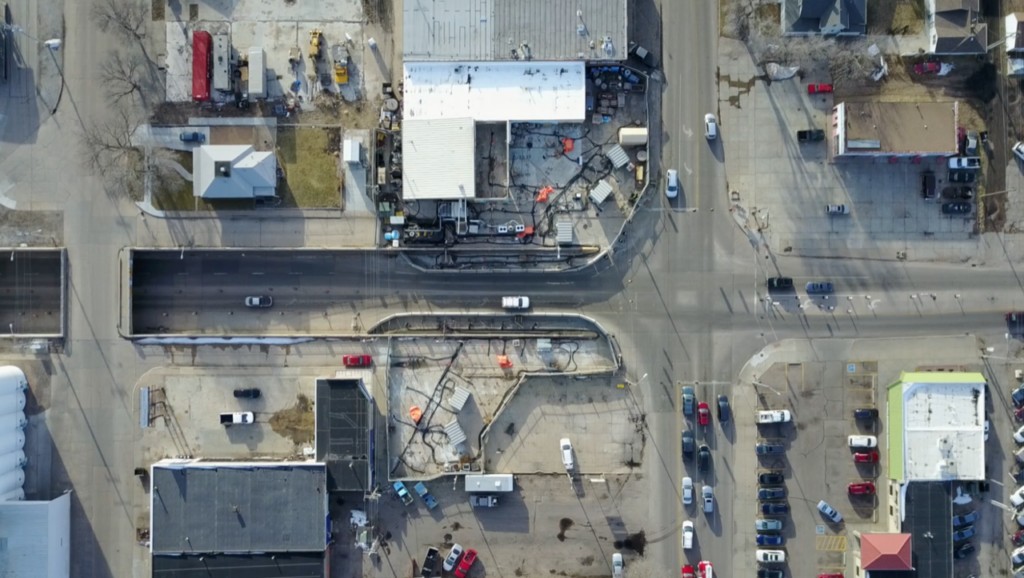
That conviction was put to the test at a Wisconsin airport where PFAS contamination — traced to decades of aqueous film-forming foam (AFFF) used in firefighting — had reached groundwater beneath the airfield. Rather than default to conventional treatment, Kinsman and the VIYA team chose a different path.
A Biological Approach to Environmental Remediation Built on Site-Specific Science
Working alongside Fixed Earth Innovations, VIYA applied a biological treatment method that identifies microbes already present in the contaminated site’s soil and groundwater — organisms that have adapted over time to the local chemical environment. These are cultivated through a non-GMO process and reintroduced into a treatment zone incorporating BAM (Bioavailable Absorbent Media), VIYA’s proprietary carbon-based material whose honeycomb pore structure simultaneously sorbs PFAS compounds and provides an ideal habitat for microbial colonization and degradation.
The results at the 1,600-square-foot treatment area were notable: PFAS concentration reductions of up to 90% within the source area within months, and greater than 99% reduction in the same well after one year — for a class of chemicals long considered resistant to biological treatment at field scale.
Sequencing Biology and Thermal Treatment
Kinsman is careful to frame biological treatment not as a universal solution, but as the first stage in a deliberate treatment sequence. A biological phase that reduces contaminant mass and mobility reshapes subsurface chemistry and shrinks the treatment footprint — creating conditions where follow-on technologies, including high-temperature thermal destruction, can operate far more efficiently than if applied to an untreated source zone.
This integrated model — biology first, thermal treatment to finish — reflects the combined capabilities VIYA brought together through the 2025 merger of ORIN Technologies and McMillan McGee. The combination of in-situ biological, chemical, and thermal remediation expertise under one team is precisely what makes a sequenced, site-specific approach possible at scale.
A Call for Structured Experimentation
Beyond the technical case, Kinsman’s op-ed challenges the procurement and regulatory culture that has kept the industry anchored to familiar methods. He calls for RFPs that create room for structured experimentation, evaluation criteria that reward adaptive thinking alongside track record, and greater openness to monitored field trials with transparent reporting — including when something doesn’t work.
The Dane County Wisconsin airport project, he argues, exists because stakeholders were willing to try something different. That willingness, applied more broadly, is what the scale of the PFAS problem demands.

Read the full op-ed in Environment+Energy Leader.
To learn more about VIYA’s biological, chemical, and thermal remediation capabilities, visit our solutions page.
VIYA is an environmental remediation company formed through the merger of ORIN Technologies and McMillan McGee in 2025. Co-headquartered in Calgary and Verona, Wisconsin, VIYA specializes in in-situ treatment of complex contamination including PFAS, chlorinated solvents, petroleum hydrocarbons, and metals. Learn more at viyaenv.com.